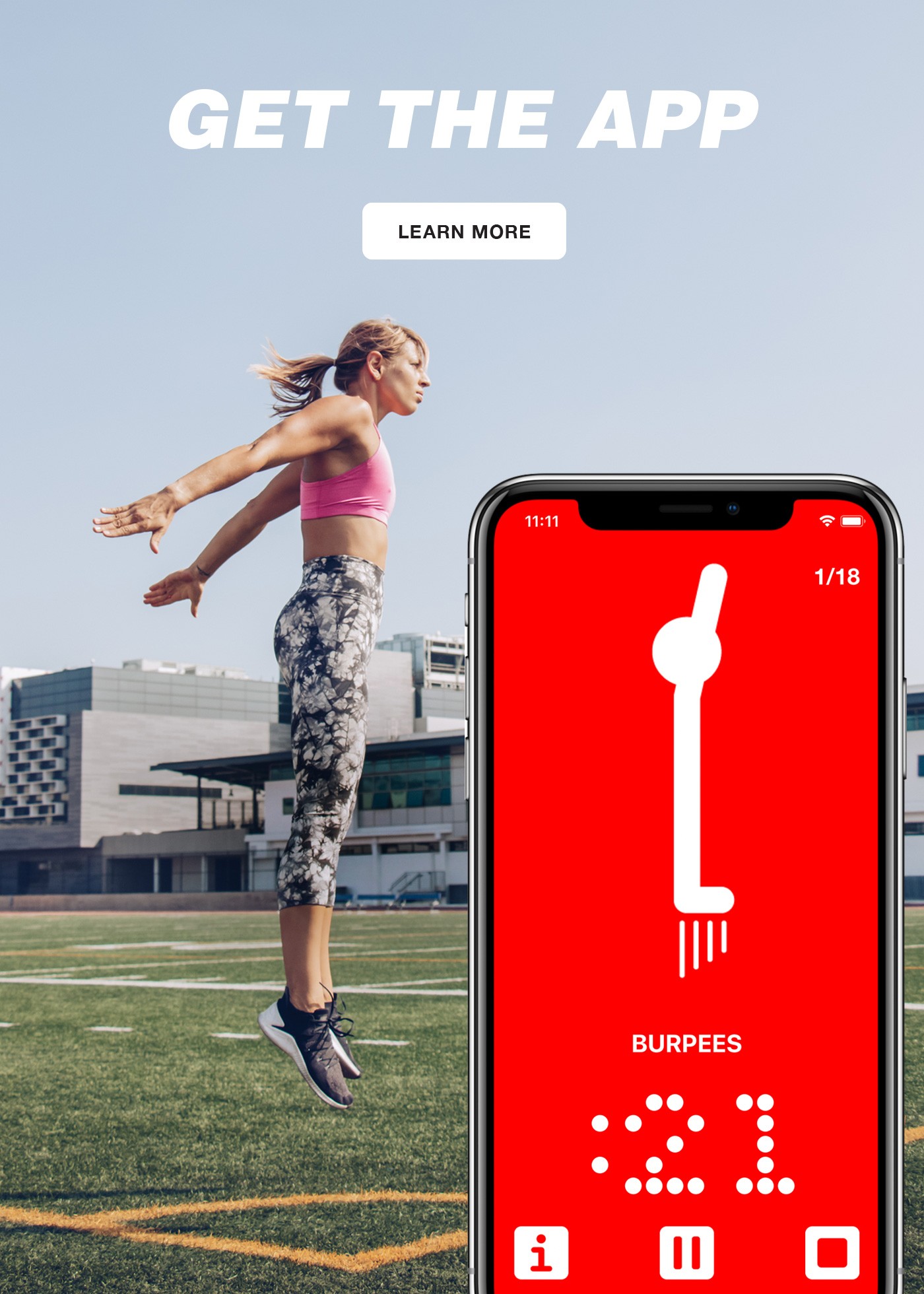
So many of you who have already subscribed as Super Athletes have said how much you like getting the latest workouts from the blog on your phone, setting up your weekly workout schedule, and getting access to tons of new workouts.
But today I’m really excited to announce that the full Super Athlete membership is finally here.
I basically designed the Super Athlete subscription as the missing data collection feature that I’ve always wanted (and that so many of you have told me you want as well). So not only am I really excited to share it with you guys, I’m really excited to use it as well!
After so many of you participated in the 12 Minute Athlete Summer Strong 5 Day Workout Challenge this summer, I thought it was about time to do another fun challenge.
This time we’re going to be focusing on one of my favorite exercises ever—the pistol squat.
I know, I know—most of you can’t do a pistol squat yet. In fact, I wouldn’t be surprised if at least some of you think that there’s no way you’ll ever be able to do a pistol, no matter how much you work at it—so you might as well not even try.
Well let me tell you something: I used to be exactly the same way. As a long limbed person, even just a little over two years ago I thought I would never, ever be able to do a pistol squat. But you know what? I don’t like to be told I can’t do something. So I put in the work—and slowly but surely managed to be able to do one legged squats, despite previously thinking that they were impossible.
So keep that in mind with this challenge, because no matter how far you are from being able to do pistols today, you can do them if you put your mind to it (and work really hard). Everybody has to start somewhere.
Whether you’re still working on getting your first one or can already bust out five ore more in a row per leg, there’s no doubt that pistol squats are one of the best bodyweight exercises you can do for strong, powerful legs.
Yes, pistols are tough. Yet if you’re too intimidated to even begin working on them, don’t be. We’ve all got to start somewhere, and even if you’re nowhere near doing a full pistol now, with hard work and consistency you’ll be amazed at what you can accomplish.
Here are 5 reasons to master pistol squats once and for all:
It drives me absolutely crazy when people tell me that if they weren’t worried about gaining weight, they would never work out again.
Sure, there’s no harm in admitting that part of the reason you work out is to look good. We all want to feel confident about how we look, and feeling good about your appearance undoubtedly helps you feel better and more confident about yourself in general.
Yet working out and eating healthy just for the sake of your appearance is never going to be very motivating, and should never be the main (or at least the only) reason you take care of your body. There are so many better reasons to keep yourself fit and healthy—reasons that will keep you motivated to keep exercising long after beach season ends.
Here are 7 ways working out makes you more awesome (aside from making you look good):
Most of you know by now that I’ve been working on my gymnastics skills as a way to challenge myself and keep learning new skills.
And as someone with zero gymnastics background and pretty much the exact opposite of the idea gymnastics body type, let me tell you, it hasn’t been easy. But I’ve had a TON of fun along the way, and have undoubtedly made progress towards my goals.
So to continue my own pursuit of becoming superhuman, I’m super excited to have Sean Maples, a strength and conditioning coach from movestrong.club showing us how to do an incredibly difficult gymnastics exercise, the front lever.
If you’ve never heard of them before, front levers are a really advanced exercise that require incredibly strong lats and super strong core strength.
It’s an exercise that you’ll definitely see a lot of gymnasts doing, but rarely people at a regular gym, because they’re really hard! Also, the taller and lankier you are, the more difficult this exercise will be (as I found out when trying this exercise).
Yet that doesn’t mean they’re impossible. There are several logical steps to building up to front levers, and just like anything else, with time and consistency you can get there. Yet even if you don’t make it your lifelong goal to do a full one, working on the various progressions is still a great way to build a crazy strong back and core.
Note: We’ll be using rings to work on the progressions today, but you can also use a regular pull up bar to practice these progressions.
Watch the full demonstration video above or browse through the short clips below to see how far I got in the progressions (not very far…) and see Sean demonstrate them for us:
Unless you manage to somehow avoid all health-related news, you probably hear a lot about protein these days.
And the obsession is real: it seems that you can’t even walk into a convenience store without seeing a large assortment of protein bars, snacks, etc. In fact, just about every type of convenience food including cereals, pasta, and even ice cream (yes, really) have versions labeled as high protein.
Among dieters, protein is constantly being promoted as the secret to weight loss, and diets like Paleo and The Zone emphasize protein as a central part of their nutrition plan. Even Weight Watchers recently changed its point system to reflect the importance of including protein in your regular meals.
But how much protein do you really need? The truth is that there is no one definitive answer—just like total calorie intake and workout frequency, it depends on your own personal goals.
Since I built it last fall, a lot of people have been asking me about the plans for my backyard fitness structure. So I thought it’d be fun to give those of you interested in building your own one day (or hiring someone to do it for you) a rundown of how I actually got mine made.
Ever since I’ve been interested in bodyweight and calisthenics-style workouts, one of the things I wanted most in the entire world was my own backyard pull up bar.
Since for most of my adult life I’ve moved about every six months to a year (whether to a new country, city, or just a different apartment), my own pull up bar was only a distant dream. For a long time, all I had was a doorway pull up bar, which isn’t ideal—but is a lot better than nothing (and I dutifully carted it with me wherever I moved).
Yet as soon as I decided it might be a good idea to stay in one place for at least a little while, the pull up bar plan was back on my radar.
Whether you’re used to using much equipment in your workouts or not, there will always be times when you just don’t have access to any workout equipment at all.
Maybe you need to skip your usual gym workout and work out at home instead, or maybe you’re traveling for weeks or months and won’t have much gym or outdoor fitness park access while you’re away.
And though you can definitely get a really good workout in using no equipment at all, one of the main reasons I tend to use equipment (especially when I’m at home in my normal routine), is that it helps to mix up my workouts and keep them interesting. It’s fun for me to think of different ways to incorporate some of my favorite pieces of equipment such as plyo boxes, medicine balls, pull up bars, and dip bars or parallel bars into my workouts, and always keeps them challenging.
But that doesn’t mean you can’t still get in a good workout when you don’t have equipment available. A few simple substitutions and a bit of creativity guarantees that you can always get an awesome workout in, no matter what you have available. No excuses!
Here are 15 simple yet awesome bodyweight substitutions for when you don’t have access to any equipment:
I got a lot of requests for ideas for 400 calorie meals that don’t take a lot of time to make, so I thought I’d do a quick post on it to get you guys thinking of ideas for your own meals.
Below are some of my favorite super easy and healthy meals you can make in 10 minutes or less or prep ahead of time to bring healthy food with you on the go. They’re all around 400 calories, with a good balance of protein, carbohydrates, and fats to keep you feeling satisfied, mentally sharp, and ready to crush your workouts.
I don’t talk about it much publicly, but I’ve suffered from depression on and off pretty much my entire life.
When I was younger, I had no idea how to cope when times got bad. I had plenty of people around me who cared, but I just didn’t know how to take care of myself when the depression hit. It was only when I found fitness that I learned that physical movement was what I needed to take myself out of the cloud and back into the world.
I first met Amy a couple of years ago at WDS, a really cool conference focused on bringing entrepreneurs and other world changers together in my (almost) hometown, Portland, Oregon, and she is an absolute rockstar. Amy has just about the most contagious smile of anyone you’ll ever meet, and is the best group fitness instructor I’ve ever encountered (I, on the other hand, am the absolute worst). She’ll make you drip sweat and your muscles scream but all the while you’ll somehow still be smiling—she’s just that good.
So I’m really excited to have Amy guest posting here today about such an important but difficult subject, depression—and how even if you suffer from depression or anxiety, fitness can help change your life.